
SUBMIT YOUR DETAILS FOR
The Dream of the Sunshine State
Imagine waking up to the gentle rustle of palm fronds and the distant scent of salt air. For decades, this has been the ultimate American dream for those reaching their golden years. Meet Sarah and Jim, a couple from the chilly suburbs of Ohio who spent thirty years shoveling snow and dreaming of a life where “winter” was just a word used in history books. Like many retirees, they wanted the Florida lifestyle—the golf courses, the community pools, and the year-round sunshine—but they were startled by the skyrocketing prices of traditional real estate in the Sunshine State.
That is when they discovered the world of modern mobile and manufactured housing. Gone are the days of the “trailer park” stereotypes of the 1970s. Today, mobile housing in Florida offers some of the most luxurious, community-oriented, and cost-effective living arrangements for retirees. If you are looking to stretch your retirement savings without sacrificing quality of life, understanding your mobile housing options is the first step toward your own tropical paradise.
Why Mobile Housing is Booming in Florida
The primary driver for the popularity of mobile housing is, unsurprisingly, affordability. With traditional home prices in coastal cities reaching record highs, manufactured homes provide a way to own a beautiful property for a fraction of the cost. However, it is not just about the price tag. For retirees like Sarah and Jim, it is about the “lock-and-leave” lifestyle.
Florida’s mobile housing market is specifically tailored to the 55+ demographic. These communities are designed with social interaction in mind. From pickleball courts and heated swimming pools to organized potluck diers and hobby clubs, these neighborhoods foster a sense of belonging that is often missing in standard suburban tracts. For a retiree, your neighbors aren’t just people living next door; they are your social circle, your walking partners, and your new best friends.
Understanding the Options: Mobile vs. Manufactured vs. Modular
Before Sarah and Jim started touring homes, they had to learn the lingo. While people often use the terms interchangeably, there are distinct differences that affect your investment and your lifestyle.
1. Traditional Mobile Homes
Technically, a “mobile home” refers to units built before June 15, 1976, when the HUD (Department of Housing and Urban Development) codes were established. You will still find many of these in older, well-established Florida parks. They are often the most affordable entry point, though they may require more maintenance and have different insurance requirements.
2. Modern Manufactured Homes
These are what most people are looking for today. Built in a controlled factory environment to strict HUD standards, modern manufactured homes are indistinguishable from site-built homes once they are installed. They come with granite countertops, vaulted ceilings, and energy-efficient appliances. For retirees, these offer the best balance of luxury and value.
3. Modular Homes
Modular homes are also built in factories but are governed by the same local building codes as traditional stick-built houses. They are transported in sections and set on a permanent foundation. While slightly more expensive than manufactured homes, they often appreciate in value more similarly to traditional real estate.
The Two Main Types of Retirement Communities
When Sarah and Jim began their search in Sarasota and Fort Myers, they realized they had to choose between two different financial models: Land-Lease and Resident-Owned communities.
Land-Lease Communities
In this scenario, you own the home itself, but you pay a monthly fee to “rent” the land it sits on. This is the most common model in Florida. The advantage? A much lower upfront purchase price. The downside? You have a monthly lot rent fee that covers community amenities, trash pickup, and sometimes lawn care. It is perfect for retirees who want to keep more of their capital liquid for travel and leisure.
Resident-Owned (Land-Share) Communities
In these parks, you own both the home and a share of the land (or a specific lot). While the initial cost is higher, you eliminate the monthly lot rent, usually replacing it with a smaller HOA fee. This provides more long-term stability regarding monthly expenses and can be a better option for those concerned about rising rent costs.
Luxury at a Discount: The Rise of 55+ Resorts
For Sarah and Jim, the “mobile” part was less important than the “resort” part. Florida is home to “Luxury Manufactured Home Resorts” that feel more like five-star vacation spots than residential neighborhoods. These communities often feature:
- Championship-style golf courses
- State-of-the-art fitness centers and spas
- Large ballrooms for live entertainment and dancing
- On-site woodworking shops and arts-and-crafts studios
- Private access to beaches or fishing docks
Choosing a 55+ community ensures that your surroundings are quiet, age-appropriate, and filled with peers who share your interests and stage of life.
Addressing the Elephant in the Room: Hurricanes
One of Sarah’s biggest concerns was Florida’s weather. “What happens when a hurricane comes?” she asked. It is a valid question. Modern manufactured homes in Florida are built to “Wind Zone 2” or “Wind Zone 3” standards, meaning they are designed to withstand significant wind speeds. Furthermore, the installation process involves heavy-duty anchoring systems that secure the home to the ground far more effectively than in decades past.
Retirees are encouraged to look for homes built after 1994, when safety standards were significantly bolstered. Additionally, many high-end communities have designated storm shelters and rigorous emergency plans, providing peace of mind for those new to the tropical climate.
Hidden Costs to Consider
While the lifestyle is attractive, Jim and Sarah learned to look beyond the sticker price. When budgeting for a Florida mobile home, remember to factor in:
- Insurance: Specialized manufactured home insurance is necessary and can vary based on the age of the home and proximity to the coast.
- Property Taxes: If you own the land, you pay traditional property taxes. If you lease, the tax is often included in your lot rent or paid as an aual decal fee.
- Maintenance: Florida’s sun and humidity can be tough on exteriors. Budget for regular pressure washing and AC servicing.
- Utilities: Modern homes are energy-efficient, but cooling a home in the Florida July heat is a cost you must plan for.
Top Regions for Retirees
Where should you start your search? Florida is a diverse state with different vibes in every corner:
- The Gulf Coast (Venice, Sarasota, Fort Myers): Known for white sandy beaches and a laid-back, cultural atmosphere.
- The Atlantic Coast (Vero Beach, Port St. Lucie): Offers great fishing, surfing, and a slightly more “classic Florida” feel.
- Central Florida (The Villages, Ocala, Lakeland): Often more affordable than the coast and protected from the worst of the coastal storm surges, featuring massive retirement hubs with endless amenities.
Conclusion: Is It Right for You?
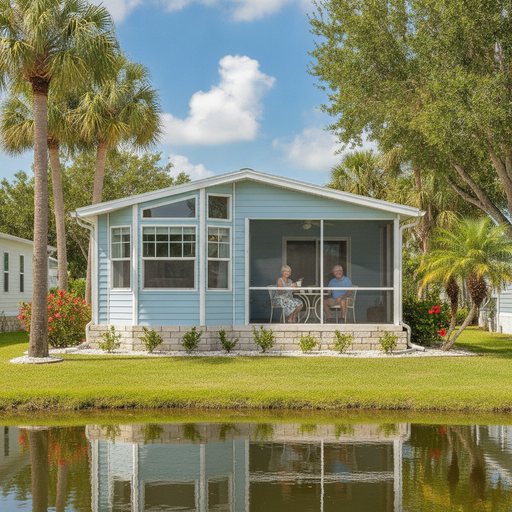
After a month of touring, Sarah and Jim found their perfect spot—a two-bedroom manufactured home with a screened-in “lanai” (the Florida term for a porch) overlooking a small lake in a 55+ community near Lakeland. They paid less than half of what a traditional condo would have cost, leaving them with plenty of money to travel and visit their grandkids back in Ohio.
Mobile housing in Florida is no longer a compromise; for many, it is a strategic choice for a better life. It offers a unique blend of affordability, community, and resort-style living that traditional housing struggles to match. By understanding the types of homes available and the different community structures, you can find a place in the sun that fits both your budget and your dreams. The sunset is waiting—are you ready to chase it?


