
SUBMIT YOUR DETAILS FOR
The Hidden Potential of the Single-Story Classic
I remember the first time I pulled up to my friend Sarah’s new house. It was a classic 1960s ranch—long, low to the ground, and admittedly, a bit plain. The sprawling lawn was a sea of flat green, and the front door seemed to disappear into the beige siding. “It has good bones,” she told me, though her eyes suggested she wasn’t quite sure how to make those bones look beautiful. Ranch-style homes are iconic symbols of suburban American life, prized for their open floor plans and easy accessibility. However, their horizontal silhouette often presents a unique challenge: how do you create a grand entrance when the house itself is designed to stay low-profile?
The secret lies in the landscaping. For a ranch home, the entrance isn’t just the door; it’s the entire journey from the sidewalk to the threshold. By using the right mix of textures, heights, and colors, you can turn a modest “rambler” into a neighborhood showstopper. In this guide, we’ll explore how to frame your entrance, create visual interest, and embrace the effortless charm that only a ranch home can provide.
Understanding the Ranch Aesthetic
Before you dig the first hole, it’s important to understand what makes a ranch home special. These houses are defined by their horizontal lines. They were originally designed to blend into the landscape rather than dominate it. This means your landscaping should work with those lines, not against them. If you plant massive, towering trees directly in front of the house, you risk “swallowing” the architecture. Instead, think of your landscaping as a way to “ground” the house while adding enough vertical interest to break up the monotony.
Creating a Focal Point
The most common issue with ranch homes is the “lost door” syndrome. Because the house is long, the eye doesn’t naturally know where to land. Your landscaping needs to act as a visual fuel, leading guests directly to your front door. You can achieve this through a combination of hardscaping (the permanent structures like paths and walls) and softscaping (the plants and flowers).
Designing a Welcoming Path
In many older ranch homes, the walkway is a narrow strip of concrete that runs parallel to the house, often hugging the foundation. This creates a cramped, uninviting feeling. To upgrade your entrance, consider a “sweeping” approach. A wider walkway—at least four to five feet—allows two people to walk side-by-side and immediately feels more luxurious.
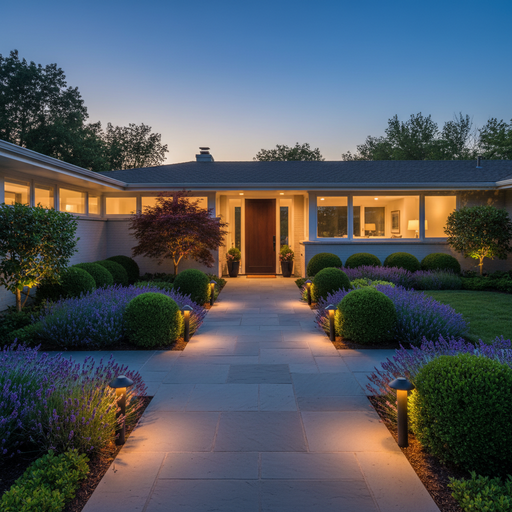
Consider materials that contrast with your home’s exterior. If you have a brick ranch, natural flagstone or bluestone can add an organic touch. If your home has modern siding, clean-lined concrete pavers in a charcoal gray can create a contemporary vibe. By curving the path slightly away from the house and then back toward the door, you create “planting pockets” where you can tuck in colorful pereials and fragrant herbs, making the walk to the door a sensory experience.
The Art of Layering: Height and Texture
Since ranch homes are low, you want to avoid a “flat” garden. The key is layering. Think of your garden in three tiers: the background, the mid-ground, and the foreground.
- The Background: Use taller shrubs or small ornamental trees at the corners of the house. This helps to soften the sharp angles of the roofline and anchors the building to the site. Species like Japanese Maples or Serviceberries are perfect because they offer height without becoming overwhelming.
- The Mid-ground: This is where you place your foundation plantings. Move away from the dated look of perfectly sheared “meatball” shrubs. Instead, choose plants with varied textures. Boxwoods provide year-round greenery, while Hydrangeas offer lush, billowing flowers in the summer.
- The Foreground: Along the edges of your walkway, use low-growing groundcovers and “spiller” plants. Creeping Jey, sedum, or creeping thyme can soften the edges of your stones and make the landscape look like it’s been there for decades.
Color Palettes That Pop
The color of your home should dictate your plant choices. If you have a white or light-colored ranch, you have a blank canvas. Deep purples, vibrant reds, and dark evergreens will stand out beautifully. If your ranch is made of red brick or dark wood, lean toward “cool” colors like silvery-blue Hostas, white blooming Azaleas, and lavender to provide a refreshing contrast.
Don’t forget the power of the front door itself. A bold door color—think navy blue, sage green, or even a classic black—can serve as the ultimate exclamation point for your landscaping. Frame that door with oversized containers filled with seasonal flowers to tie the whole look together.
Lighting: The Evening Glow
Landscape lighting is often the most overlooked element of curb appeal, yet it’s the most transformative. For a ranch home, lighting serves two purposes: safety and drama. Because ranch homes are long, they can look dark and uninviting at night. Path lights should be staggered along your walkway to guide the way without looking like an airport runway.
Use “up-lighting” on your focal point trees or in the corners of your house to create a sense of height and volume after the sun goes down. A well-placed spotlight on a textured stone wall or a beautiful ornamental tree adds a layer of sophistication that makes the home look expensive and well-cared for.
Low-Maintenance Solutions for Modern Living
We’re all busy, and the last thing you want is a front yard that requires a full-time gardener. Many ranch owners are turning to “xeriscaping” or native planting. Native plants are adapted to your local climate and soil, meaning they require less water and fewer fertilizers. Ornamental grasses, for example, are fantastic for ranch homes. They provide movement and sound as they rustle in the wind, and they require almost no maintenance other than a quick trim once a year.
The Power of Mulch and Edging
If you want your landscaping to look professional, never underestimate the power of a clean edge. Use a spade to create a deep “V” trench between your lawn and your garden beds. Fill your beds with a dark, organic mulch. Not only does this suppress weeds and retain moisture, but the dark color also provides a high-contrast backdrop that makes the green of your plants really “pop.”
Small Details, Big Impact
Sometimes, the biggest changes come from the smallest additions. Consider adding a small bench near the entrance, even if you don’t plan on sitting there often. It suggests a lifestyle of leisure and hospitality. Window boxes are another classic ranch home staple. They bring the garden up to eye level and break up the long stretches of siding or brick.
When Sarah finally finished her landscaping, the transformation was incredible. She didn’t change the footprint of her house, but by adding a wide flagstone path, layering her shrubs, and adding some warm evening lighting, her ranch went from “just another house” to the jewel of the block. It felt grounded, intentional, and above all, like home.
Conclusion
Landscaping a ranch home entrance is all about balance. It’s about respecting the low, horizontal lines of the architecture while introducing enough variety in height, color, and texture to create visual excitement. Whether you prefer a modern, minimalist look with structural grasses and concrete, or a lush, cottage-style garden filled with roses and lavender, the principles remain the same: lead the eye to the door, layer your plants, and don’t be afraid to take up some space.
Your ranch home has a unique charm that deserves to be celebrated. With a little plaing and some dirt under your fingernails, you can create an entrance that not only increases your property value but also gives you a sense of pride every time you pull into the driveway. So, grab a shovel and start dreaming—your home’s potential is just waiting to be unearthed.


