
SUBMIT YOUR DETAILS FOR
The Hidden Potential of the Ranch-Style Entryway
There is something inherently nostalgic and comforting about a ranch-style home. With its long, low profile and sprawling footprint, the ranch house—or “rambler,” as it is often called—is a staple of American suburban architecture. However, because these homes sit low to the ground and prioritize horizontal lines, their entryways can sometimes feel a bit “flat” or overlooked. If you have ever pulled into your driveway and felt like your front door was blending into the siding, you are not alone.
The beauty of a ranch home lies in its simplicity, but that simplicity is also a blank canvas. Landscaping the entryway of a ranch home is about more than just planting a few flowers; it is about creating a transition from the street to your sanctuary. It is about adding vertical interest to break up those long horizontal lines and using textures to provide depth. In this guide, we will walk through a variety of landscaping strategies designed specifically to make your ranch home’s entrance the envy of the neighborhood.
Start with the Journey: Designing Your Walkway
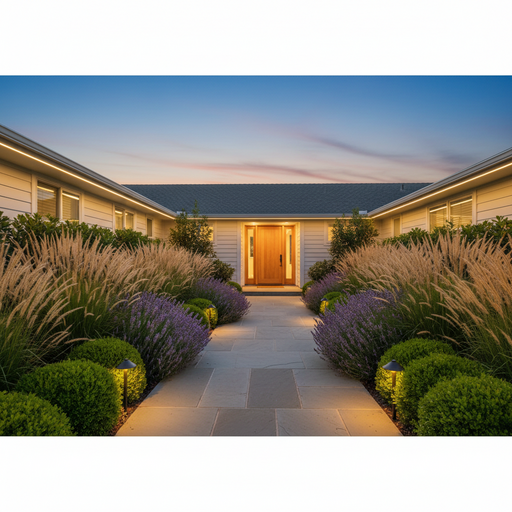
In a ranch home, the journey to the front door is just as important as the door itself. Many older ranch houses come with a narrow, straight concrete path that runs parallel to the house. To create a more inviting feel, consider breaking away from those rigid lines. A curved walkway creates a sense of movement and mystery, gently guiding guests toward your entrance.
When choosing materials, think about the “vibe” of your home. If you have a Mid-Century Modern ranch, large rectangular concrete pavers with river rock or moss between them can look incredibly chic. For a more traditional or rustic ranch, consider flagstone or brick pavers in warm tones. A wider path—at least four to five feet—allows two people to walk side-by-side, which instantly makes the home feel more spacious and welcoming.
Creating a “Landing Strip” or Small Patio
Because ranch homes often lack a grand front porch, you can create a “pseudo-porch” by widening the area right in front of the door. A small stone landing or a mini-patio with enough room for a bistro chair or a couple of high-quality planters creates a focal point. This anchors the entryway and signals to visitors that they have arrived at the “heart” of the exterior.
The Power of Layering: Adding Vertical Interest
One of the biggest challenges with ranch landscaping is the “pancake effect”—where everything feels like it is on the same horizontal plane. To fix this, you need to think in layers. Professional landscapers use a three-tier approach to create depth:
- The Background: Use taller shrubs or small ornamental trees at the corners of the house or between windows. Options like Emerald Green Arborvitae or Japanese Maples provide height without overwhelming the low roofline.
- The Mid-Ground: This is where you place your flowering shrubs and mounding plants. Think Hydrangeas, Azaleas, or Boxwoods. These provide the bulk of your visual weight and color.
- The Foreground: These are your “spillers” and low-growers. Creeping Phlox, Hostas, or seasonal auals soften the edges of your walkway and bring the garden right down to the ground.
By staggering these heights, you draw the eye up and down, making the house appear more dynamic and integrated into the land rather than just sitting on top of it.
Framing the Door with Intentional Plantings
Your front door should be the star of the show. To highlight it, use “framing” techniques. Symmetrical landscaping—placing identical plants or pots on either side of the door—creates a formal, balanced look that works well with traditional ranch styles. If your home is more contemporary, an asymmetrical approach with a large specimen plant on one side and a cluster of smaller pots on the other can feel more organic and artistic.
Don’t forget the power of containers. Large, glazed ceramic pots in a color that complements your front door can add an instant pop of style. The best part? You can swap the plants out seasonally. Think bright tulips in the spring, lush ferns in the summer, ornamental cabbages in the fall, and evergreen boughs with lights in the winter.
Incorporating Color and Texture for Year-Round Appeal
A common mistake is choosing plants that only look good in June. For a ranch home, which is visible all year round, you want a mix of evergreen and deciduous plants. Evergreens provide the “bones” of your landscape, ensuring that your entryway doesn’t look barren during the winter months.
Texture is the secret ingredient that makes a garden look professional. Contrast the fine needles of a juniper with the large, waxy leaves of a hosta. Pair the airy, dancing stems of ornamental grasses like Blue Fescue or Peisetum with the solid, structural form of a trimmed hedge. This variety keeps the eye moving and prevents the landscaping from looking like a green “blob.”
Lighting: The Evening Transformation
Your landscaping efforts shouldn’t disappear when the sun goes down. In fact, ranch homes look particularly stuing with well-placed landscape lighting. Because they are low to the ground, “up-lighting” a specimen tree or the texture of a stone wall can create dramatic shadows and a warm, high-end glow.
Path lights are essential for safety, but they also define the shape of your garden beds at night. Avoid the “runway” look by staggering the lights on either side of the path rather than placing them in a straight line. Soft, warm-toned LEDs are much more inviting than harsh, cool-white bulbs. Consider “moonlighting” as well—placing a light high up in a nearby tree to cast a soft, dappled glow over the entire entryway.
Low-Maintenance Solutions for the Busy Homeowner
Not everyone wants to spend their weekends pruning and weeding. If you prefer a “set it and forget it” approach, look into xeriscaping or using native plants. Native plants are adapted to your local climate and soil, meaning they require less water and fewer pesticides.
Rock gardens are also a fantastic option for ranch homes. Using a mix of river rocks, boulders, and drought-tolerant succulents or grasses can create a modern, clean look that requires almost zero mowing or trimming. Mulching is another key factor—a fresh layer of dark brown or black mulch once a year not only suppresses weeds but also makes the colors of your plants “pop” against the earth.
Final Thoughts: Creating a Lasting First Impression
Landscaping the entryway of your ranch home is an investment that pays off every time you pull into your driveway. By focusing on creating a clear, inviting path, adding vertical layers to balance the horizontal architecture, and choosing a mix of textures and colors, you transform a simple house into a stuing home.
Remember, landscaping is a journey, not a destination. Start with a solid plan, focus on the structural elements like walkways and larger shrubs first, and then have fun filling in the gaps with flowers and decor. Your ranch home has the potential to be a showstopper—all it needs is a little bit of green, a little bit of light, and a whole lot of love.


