
SUBMIT YOUR DETAILS FOR
The Golden State’s Architectural Renaissance
Imagine driving down the Pacific Coast Highway as the sun begins to dip below the horizon, casting a warm, amber glow over the rugged cliffs of Big Sur or the manicured streets of Newport Beach. For decades, California has been more than just a place on a map; it has been a laboratory for the “American Dream.” But that dream has evolved. The sprawling ranches of the 1950s have given way to a new era of design—one that prioritizes sustainability, light, and a seamless coection with the breathtaking natural environment.
Contemporary California housing isn’t just about luxury; it’s about a lifestyle that blurs the boundaries between the indoors and the outdoors. Whether it’s a sleek glass pavilion tucked into the Hollywood Hills or a modular eco-home in the high desert of Joshua Tree, the modern California aesthetic is defined by its ability to breathe. In this article, we will explore the diverse styles currently shaping the California landscape and why this architectural movement continues to influence global design trends.
The Modern Coastal Aesthetic: Dissolving the Walls
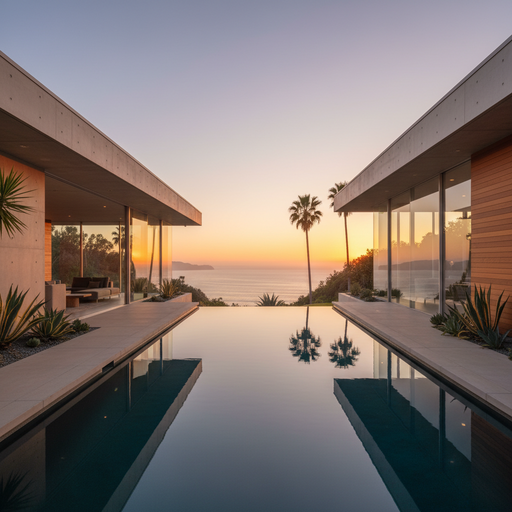
Perhaps the most iconic of all contemporary California styles is the Modern Coastal home. Unlike the traditional “Cape Cod” styles found on the East Coast, California’s coastal contemporary homes are focused on transparency. The goal is to make the Pacific Ocean the centerpiece of the living room.
Key features of this style include:
- Floor-to-Ceiling Glass: Large sliding glass walls that disappear into pockets, effectively turning a living room into a covered patio.
- Neutral Palettes: Colors inspired by the sand, driftwood, and seafoam—whites, soft greys, and light oaks.
- Open Floor Plans: A lack of internal barriers to ensure that light reaches every corner of the house.
Living in one of these homes feels like living inside a high-definition photograph. The architecture serves as a frame, intentionally minimalist so as not to distract from the natural beauty outside.
The Contemporary Farmhouse: A Modern Twist on Tradition
In the last decade, you couldn’t drive through a neighborhood in Los Angeles, Napa Valley, or even the suburbs of San Jose without seeing the “Modern Farmhouse.” Popularized by lifestyle icons and refined by high-end architects, this style bridges the gap between cozy tradition and sharp modernism.
The contemporary California version of the farmhouse often swaps the cluttered “shabby chic” look for something much more streamlined. You will see stark white board-and-batten siding contrasted with matte black window frames and gabled roofs. Inside, the rustic elements—like reclaimed wood beams—are paired with industrial light fixtures and polished concrete floors. It’s a style that feels grounded and familial but remains undeniably sophisticated.
Desert Modernism 2.0: Living with the Heat
As we move inland toward Palm Springs and the Coachella Valley, contemporary architecture takes a different turn. “Desert Modernism” was born here in the mid-20th century, but the 21st-century update is even more radical. Architects are now designing homes that don’t just look cool—they stay cool.
Contemporary desert homes often feature deep roof overhangs to provide shade, thick thermal-mass walls made of rammed earth or concrete, and xeriscaped gardens that require zero water. These homes often use a “U-shape” or “L-shape” layout centered around a courtyard and a pool, creating a private oasis that protects inhabitants from the harsh desert winds while celebrating the stark beauty of the arid landscape.
The Rise of the ADU: High-Tech Urban Minimalism
California’s housing crisis and changing zoning laws have birthed a unique contemporary phenomenon: the Accessory Dwelling Unit (ADU). While often called “gray flats,” today’s ADUs are masterpieces of small-scale contemporary design. Because space is at a premium in cities like San Francisco and San Diego, these structures are clinics in efficiency.
Modern ADUs often utilize “High-Tech Minimalism,” featuring:
- Multi-functional Furniture: Murphey beds, hidden storage, and convertible tables.
- Vertical Space: High ceilings and clerestory windows to make small footprints feel massive.
- Industrial Materials: Corrugated metal, plywood interiors, and exposed steel.
This style reflects the tech-driven spirit of the state, where functionality and “smart home” integration are just as important as the exterior facade.
The “Soft Modern” Approach: Warmth in Geometry
For a while, modern architecture was criticized for being “cold” or “hospital-like.” California’s answer to this is the “Soft Modern” style. This approach keeps the clean lines and flat roofs of modernism but infuses the structure with organic materials to add warmth and soul.
Instead of just white plaster and cold steel, Soft Modern homes use warm cedar siding, natural stone accents, and lush indoor greenery. You might see a living room with a sharp, geometric fireplace, but it’s balanced by a soft mohair rug and handcrafted wooden furniture. It is the architectural equivalent of a “zen” retreat—minimalist enough to clear the mind, but tactile enough to feel like a home.
Sustainability as a Design Language
In contemporary California, you caot talk about style without talking about the environment. California has some of the strictest green building codes in the world (Title 24), which has forced architects to get creative. Sustainability is no longer an “add-on”; it is the foundation of the design.
Modern homes now integrate solar shingles that look like traditional tiles, greywater recycling systems that nourish drought-resistant gardens, and “living walls” that provide natural insulation. The beauty of these homes lies in their intelligence. A contemporary California home is often “Net Zero,” meaning it produces as much energy as it consumes. This marriage of high-tech engineering and high-end design is perhaps the most defining characteristic of the current era.
Conclusion: The Future of the California Home
The contemporary housing styles of California tell a story of adaptation. From the coast to the desert, the architecture reflects a culture that is constantly reinventing itself. It is a style that respects the past—drawing from the Mid-Century masters—while looking forward to a future where homes are smarter, greener, and more coected to the land.
Whether you are a fan of the sharp angles of a hillside modern or the cozy geometry of a new farmhouse, one thing is certain: California remains the epicenter of residential iovation. The “California Dream” isn’t just about owning a piece of land anymore; it’s about living in a space that inspires, sustains, and opens itself up to the world outside.


