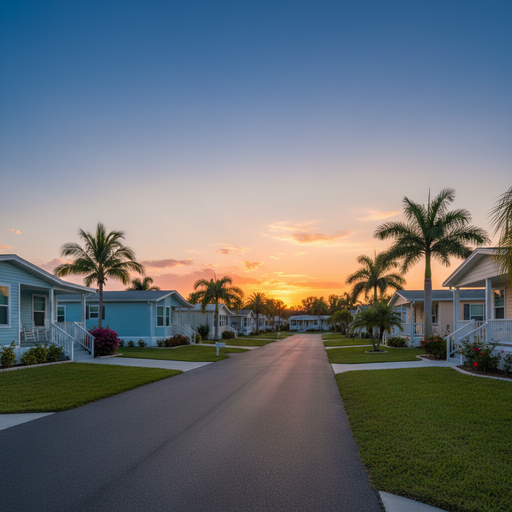
The Florida Goldmine: Why Mobile Home Park Investing is the Ultimate Sunshine State Strategy

SUBMIT YOUR DETAILS FOR
The Unexpected Discovery in the Heart of Florida
Imagine driving down a sun-drenched coastal highway in Florida. To your left, luxury high-rise condos are stretching toward the clouds, and to your right, sprawling suburban developments are popping up overnight. Most investors have their eyes glued to those shiny glass towers or the latest short-term rental craze in Orlando. But if you look a little closer at the palm-lined pockets nestled between the main roads, you might find something far more lucrative, stable, and overlooked: the humble mobile home park.
A few years ago, I met an investor named David. David had spent a decade flipping single-family homes in Miami. He was tired. He was tired of the “tenant, trash, and toilets” drama, the soaring insurance premiums, and the razor-thin margins. One afternoon, he stumbled upon a 40-unit mobile home park in Central Florida. It wasn’t flashy. There were no granite countertops or infinity pools. But as he looked at the books, his eyes widened. The park had a 95% occupancy rate, the expenses were incredibly low because the tenants owned their own homes, and the demand for affordable housing in Florida was—and still is—hitting an all-time high.
David’s story isn’t unique. It represents a massive shift in how savvy investors are looking at Florida real estate. In a state where the population is exploding and the cost of living is rising, mobile home parks (MHPs) have become the “holy grail” of recession-resistant cash flow. Let’s dive into why this asset class is dominating the Florida market and how you caavigate its unique landscape.
The Perfect Storm: Why Florida is MHP Heaven
Florida isn’t just a vacation destination; it’s a demographic powerhouse. Every single day, nearly 1,000 people move to the Sunshine State. Many of these newcomers are retirees looking to stretch their social security checks, while others are workforce families seeking jobs in Florida’s booming service and tech industries. What do they all have in common? They all need a place to live that doesn’t cost $3,000 a month.
The “Silver Tsunami” is perhaps the biggest driver. Baby boomers are retiring at a rate of 10,000 per day across the U.S., and a huge portion of them want to spend their golden years in Florida. Mobile home parks, particularly 55+ age-restricted communities, offer these retirees a sense of community, a yard, and a Florida lifestyle at a fraction of the cost of a traditional site-built home. As an investor, this means you have a built-in, ever-growing pool of potential residents.
Furthermore, Florida’s tax-friendly environment—specifically the lack of state income tax—draws capital from all over the country. This capital isn’t just buying homes; it’s buying the land under them. In the world of mobile home parks, you aren’t just a landlord; you are a land-lease business owner. You provide the infrastructure, and the residents provide the “house.”
The “Sticky Tenant” and the Magic of Lot Rentals
One of the most compelling aspects of mobile home park investing in Florida is the concept of the “sticky tenant.” In a traditional apartment complex, a tenant can pack their bags and leave over a weekend if the rent goes up by $50. In a mobile home park, specifically one where the residents own their homes (known as Tenant-Owned Homes or TOH), moving is a different story.
Moving a mobile home can cost anywhere from $5,000 to $10,000. Because of this high cost of exit, tenants are much more likely to stay for the long haul. They take pride in their homes, they plant gardens, they build decks, and they treat the community like home—because it is. For the investor, this means incredibly low turnover rates and a predictable stream of income.
In Florida, the most sought-after model is the “lot-rent-only” model. In this scenario, the investor owns the land, the utility lines, and the roads, but does not own the actual mobile homes. This drastically reduces maintenance costs. You don’t have to worry about a leaky faucet in unit 4 or a broken AC in unit 12. The resident is responsible for their own home maintenance. You simply collect the lot rent for the use of the land. It’s the closest thing to “mailbox money” you can find in the real estate world.
Navigating the Florida Landscape: Infrastructure and Utilities
While the rewards are high, Florida presents its own unique set of challenges that every investor must master. The first is infrastructure. Many older parks in Florida were built in the 1960s and 70s. This means they might have aging clay pipes or, worse, septic systems that are reaching the end of their lifespan.
During the due diligence phase, it is critical to inspect the “bones” of the park. Are the electric pedestals upgraded to handle modern 100-amp or 200-amp loads? Does the park have a master-metered water system, or are the units individually metered? In Florida, many successful investors are implementing “bill-back” systems (RUBS) where the cost of utilities is passed back to the tenants. This not only encourages conservation but also immediately increases the Net Operating Income (NOI) of the property, which in turn boosts its valuation.
Another Florida-specific factor is the transition from septic to city sewer. Many Florida municipalities are forcing parks to hook up to city systems to protect the state’s groundwater. While this can be an expensive capital expenditure, it often significantly increases the long-term value and “bankability” of the park.
The Hurricane Factor: Risk Mitigation and Insurance
You can’t talk about Florida real estate without talking about hurricanes. This is often the first concern for out-of-state investors. However, the risk is often more manageable than it seems. Most modern mobile homes (built after 1994) are constructed to much higher wind-load standards than their predecessors. In fact, homes built under current HUD codes often perform better in storms than older site-built homes.
From an investment standpoint, the key is insurance and preparation. If you own a lot-rent-only park, your insurance exposure is actually quite low because you aren’t insuring the homes—the residents are. You are primarily insuring the clubhouse, the office, and the common areas. To mitigate risk, smart owners ensure the park has a solid tree-trimming schedule to prevent falling limbs and a clear emergency plan for residents. In the eyes of many institutional investors, the “hurricane risk” is a priced-in factor that is outweighed by the incredible year-round demand for the units.
The Hunt for Value-Add Opportunities
How do you actually make money in Florida mobile home parks? The most common path is the “value-add” strategy. This involves finding a “mom-and-pop” owned park that has beeeglected or under-managed. Often, these owners haven’t raised rents in a decade, leaving them significantly below market rates.
By coming in and performing “pride of ownership” upgrades—things as simple as repaving the roads, painting the entrance sign, adding new LED streetlights, and enforcing community rules—you can transform the feel of the neighborhood. As the community improves, you can bring rents up to market levels. Because MHP values are calculated based on a capitalization rate (Cap Rate) of the NOI, every dollar you save in expenses or gain in rent increases the property’s value exponentially.
Another value-add play in Florida is infilling vacant lots. If a park has 50 lots but only 40 homes, the owner is paying taxes and maintenance on those 10 empty spots without getting any revenue. Bringing iew or used homes to fill those lots is one of the fastest ways to force appreciation. In Florida, where the waiting list for affordable housing is miles long, those homes usually sell or rent within days.
The Legal Side: Florida Statutes and Right of First Refusal
Investing in Florida requires a working knowledge of Florida Statute 723. This is the law that governs the relationship between mobile home park owners and their tenants. One of the most critical aspects of this statute is the “Right of First Refusal.”
In Florida, if you intend to sell a mobile home park and change its use (for example, tearing it down to build condos), the homeowners’ association (HOA) often has the right to match any offer you receive and buy the park themselves. This is designed to protect affordable housing. As an investor, you must ensure your legal team is well-versed in Chapter 723 to avoid costly delays or litigation. Successful owners work *with* their HOAs, not against them, fostering a partnership that keeps the park stable and profitable.
Conclusion: The Future of Florida Manufactured Housing
The days of mobile home parks being “the best-kept secret” are quickly coming to an end. Large institutional investors, including private equity firms and pension funds, have poured billions into the sector over the last five years. They recognize that in an uncertain economy, land-lease communities in growth states like Florida are among the safest bets on the board.
However, there is still plenty of room for the individual investor or small syndication group. Whether it’s a 20-lot park in a quiet rural county or a 100-lot powerhouse in a bustling metro area, the fundamentals remain the same: provide a clean, safe, and affordable place for people to live, and the returns will follow. Florida isn’t just about the sun and the sand; it’s about the massive, unyielding demand for a place to call home. If you’re willing to do the work, the Florida goldmine is waiting for you.


